
Practical Guides

Operational knowledge, clearly explained.

Reference guides on warehouse operations, inventory management, and cross-border shipping — written for Irish businesses, not logistics textbooks.

Warehouse Operations

Getting your physical operation right.

Clear diagram showing an efficient pick-and-pack workflow in a small warehouse, with labelled zones and movement paths
Pick & Pack

Designing a Pick-and-Pack Process That Scales

The pick-and-pack process is the heartbeat of any fulfilment operation. For small businesses, it's often the first place that informal habits become costly. Understanding the three main picking methodologies — single-order, batch, and zone — and when each is appropriate is the starting point for building a process that works at your current volume and continues to work as you grow.

Single-order picking is straightforward: one picker, one order, picked and packed in sequence. It's appropriate for low volumes, high-SKU-count orders, or operations where accuracy is paramount and speed is secondary. The main limitation is that the picker spends a high proportion of time travelling rather than picking.

Batch picking groups multiple orders together and picks all items for several orders in a single warehouse pass. This reduces travel time significantly when orders have overlapping SKUs — common in operations with a focused product range. The trade-off is the need for a sorting step after picking, which introduces its own error risk if not managed carefully.

Zone picking divides the warehouse into sections and assigns pickers to zones. Each picker handles only their zone's items; orders are consolidated at a merge point. This approach works well when you have distinct product categories in different areas and enough volume to justify the coordination overhead.

Choosing between these isn't a permanent decision — many operations use different methods for different order types or seasons. The key is making the choice deliberately rather than by default.

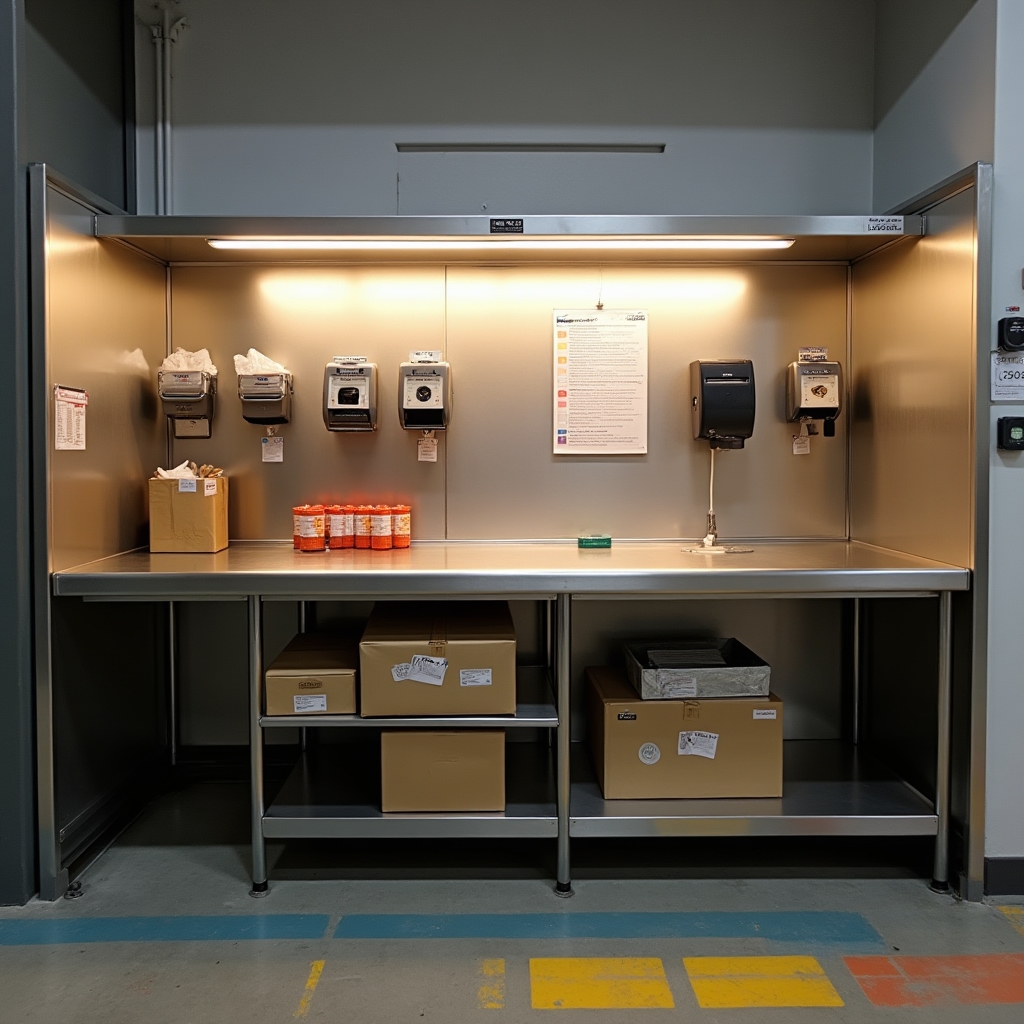
Pack station design

A well-designed pack station reduces errors and pack times. The essentials: all materials within arm's reach (tape, void fill, labels, boxes), a clear staging area for picked items, and a defined flow direction so there's no ambiguity about where things go next. A simple printed checklist at the station — reviewed and updated regularly — is more reliable than memory.


Whiteboard showing ABC inventory analysis categories with product groupings and colour coding for a small warehouse operation
Inventory

ABC Analysis: Prioritising Your Inventory Attention

Not all SKUs deserve equal attention. ABC analysis is a simple but powerful framework for allocating your inventory management effort where it has the most impact.

The principle is straightforward: rank your SKUs by revenue contribution (or, alternatively, by order frequency). The top segment — typically a small number of SKUs that account for a large proportion of revenue — is your A category. These warrant the most attention: tighter counting frequencies, closer monitoring of stock levels, and priority placement in your warehouse for fast access.

B-category items are mid-range contributors. They warrant regular attention but don't need the same intensity as A items. C items — often a large number of SKUs contributing a small proportion of revenue — can be managed with lighter-touch processes.

Practical application: Run your analysis quarterly at minimum. Product velocity changes — a C item can become an A item after a promotion or seasonal shift. If your analysis is static, your slotting and counting priorities become misaligned with reality.

ABC analysis also informs warehouse layout decisions. A-category items should be in the most accessible locations — closest to the pack station, at the most ergonomic height, in positions that minimise travel distance. This single change, applied consistently, can reduce average pick times without any additional investment.

Cross-Border Shipping

Understanding post-Brexit requirements.

Close-up of customs documentation forms on a desk with a laptop showing a commercial invoice template for cross-border shipping from Ireland to UK
Customs

What Irish Businesses Need to Know About Shipping to Great Britain

Since January 2021, shipments from Ireland to Great Britain (England, Scotland, and Wales) are treated as exports from the EU and imports into the UK. This is a significant change for any Irish business that previously shipped to GB customers without documentation. Northern Ireland has a different arrangement under the Windsor Framework and is covered separately.

What you need for each GB shipment:

A commercial invoice is required for all commercial shipments. This is not the same as a customer receipt — it's a formal document that declares the contents, value, country of origin, and other details required for customs clearance. Your carrier or freight forwarder will use this document to process the shipment through UK customs.

A commodity code (also called an HS code or CN code) must be included on your commercial invoice. This is an internationally standardised numerical code that classifies your product for customs purposes. Incorrect commodity codes can cause delays or incorrect duty assessment. The UK Global Tariff database and the Irish Revenue's Tariff Classification service are useful references.

An EORI number (Economic Operators Registration and Identification) is required for businesses exporting commercially. Irish businesses need an IE-prefix EORI for exporting from Ireland. You may also need a GB-prefix EORI if you're acting as the importer of record in the UK — though for most small shippers, the carrier or their broker handles UK import clearance.

Incoterms determine who bears responsibility for costs and risk at each stage of the shipment. For small shippers, the most relevant are DDP (Delivered Duty Paid, where the seller covers all costs including UK import duty and VAT) and DAP (Delivered at Place, where the buyer is responsible for import costs). DDP avoids surprise charges for your customer but requires you to understand and manage UK import VAT — which has implications for VAT registration.

This guide provides general information only. Customs regulations change and individual circumstances vary. For specific advice on your situation, consult a customs broker or qualified advisor.

Want the full reference pack?

Programme participants receive working templates and checklists covering all six modules.